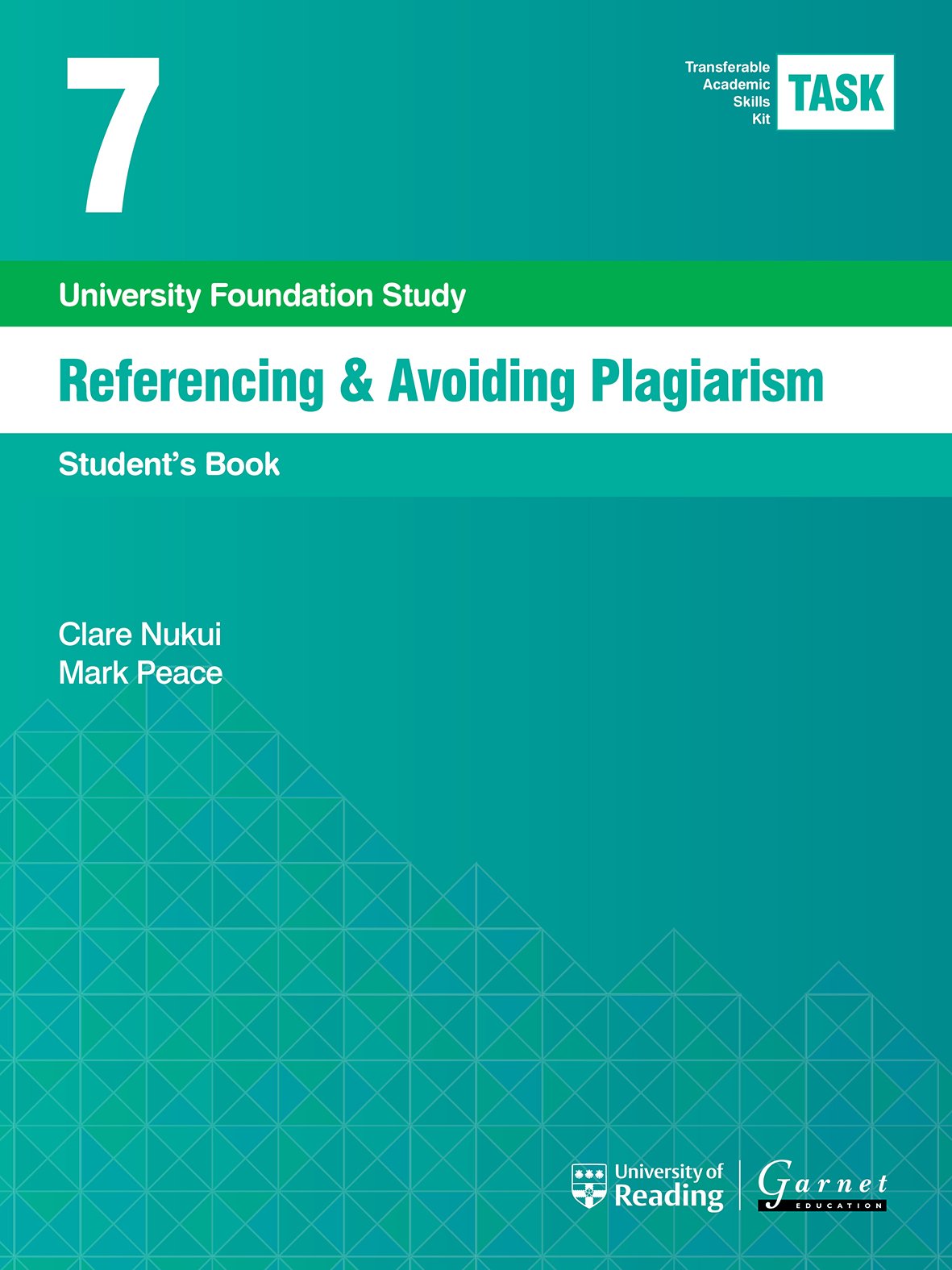
The world of academia is built on a foundation of trust and original thought. But navigating assignments, research papers, and dissertations can feel like walking a tightrope, especially when you're drawing from a wealth of existing knowledge. The key to maintaining your academic integrity while engaging with others' ideas? Master the art of Avoiding Plagiarism with Proper Harvard Referencing. This isn't just about following rules; it's about crediting sources accurately, showcasing your research, and ultimately, elevating the quality and trustworthiness of your own work.
At institutions like the National College of Ireland (NCI), Harvard referencing is the standard – a two-part 'author date' system designed to give credit where credit is due and to guide your readers to your sources. Let's demystify it together.
At a Glance: Your Quick Guide to Academic Integrity
- Plagiarism is serious: It’s using someone else's work without proper acknowledgment. Avoid it at all costs.
- Harvard is your friend: It's a clear, two-part referencing system (in-text citations + reference list) used widely, including at NCI.
- Always cite: Every piece of information, idea, or direct quote from another source needs an in-text citation.
- Paraphrase, don't just quote: Summarize ideas in your own words, only quoting directly when absolutely necessary.
- Reference list is essential: A full, alphabetized list of every source cited in your text.
- NCI Specifics: Always double-check your institution's specific Harvard guidelines, as variations exist.
- Ask your lecturer: When in doubt about the required style (Harvard, APA, IEEE), confirm with your instructor.
Why Plagiarism Puts Your Academic Journey at Risk
Before we dive into the "how-to," let's be crystal clear about the "why." Plagiarism isn't just a minor oversight; it's a serious academic offense. It undermines the very purpose of education – to develop original thought and critical analysis. When you present someone else's words or ideas as your own, you're not only deceiving your readers and instructors but also robbing yourself of the opportunity to truly engage with the material and grow as a scholar.
Consequences can range from failing an assignment or module to suspension or even expulsion from your program. The good news? Avoiding it is straightforward when you understand and consistently apply proper referencing techniques, starting with the widely adopted Harvard style.
Harvard Referencing: Your Blueprint for Ethical Scholarship
The Harvard referencing style is a powerful tool. It allows you to seamlessly integrate external information into your writing while clearly differentiating your original thoughts from those you’ve drawn from others. It's an 'author date' system, meaning that both in your running text and in your final list of sources, the author's surname and the year of publication are primary identifiers.
At NCI, like many institutions, specific Harvard guidelines apply. While reference managers can be helpful, always cross-reference their output with your institution's precise requirements to ensure accuracy. Your lecturer is always the definitive source for confirming the required referencing style for any assignment.
The Two Pillars of Harvard: In-Text Citations and the Reference List
Think of Harvard referencing as a two-way street. You mark where you've used information in your text (in-text citations), and then you provide a detailed map to that information at the end of your work (the reference list). Both are indispensable, and one cannot exist without the other. Every in-text citation must have a corresponding entry in your reference list, and vice versa.
Mastering In-Text Citations: Guiding Your Reader
In-text citations are your immediate acknowledgment within the body of your essay, report, or thesis. They tell your reader exactly when and where you've used an external source.
The Two Core Types of In-Text Citations
You'll primarily use two formats to weave your sources into your narrative:
- Parenthetical Citations: This is perhaps the most common. You present the information or idea, and then place both the author's surname(s) and the publication year in parentheses at the end of the sentence or clause, before the final punctuation.
- Example: The rise of remote work has fundamentally reshaped corporate structures (Cole and Kelly, 2020).
- When to use: Ideal when the source isn't the primary focus of your sentence, but rather the information itself.
- Narrative Citations: Here, you integrate the author's name directly into your sentence structure. The publication year then follows in parentheses immediately after the author's name.
- Example: Taylor (2019) suggests that effective leadership requires adaptability and emotional intelligence.
- When to use: Excellent for emphasizing the author or for varying your sentence structure to improve flow.
Handling Multiple Authors with "Et al."
For sources with three or more authors, Harvard referencing offers a neat shorthand: "Et al." This Latin phrase, meaning "and others," saves space in your in-text citations.
- Rule: After the first author's surname, add "et al." (in italics).
- Example: Robbins et al. (2017) noted a significant shift in consumer preferences towards sustainable products.
- Important: While "et al." is used in-text, all author names must be included in the corresponding entry in your full reference list.
Direct Quotations vs. Paraphrasing: A Crucial Distinction
While direct quotes can be impactful, academic writing strongly favors paraphrasing. When you paraphrase, you restate the author's ideas in your own words, demonstrating your understanding of the source material. This is a much higher-level skill than simply copying.
- Paraphrasing:
- No page number required in the in-text citation (unless you want to point to a specific passage, but it's generally not mandatory).
- Preferred method for integrating source material.
- Example (Paraphrased): Organizations are increasingly adopting flexible work models to enhance employee satisfaction and productivity (Smith, 2021).
- Direct Quotations:
- Must include the page number(s) in the in-text citation.
- Use sparingly – only when the author's exact words are essential (e.g., a definition, a specific argument, or a memorable phrase).
- Example (Direct Quote): According to Connolly and Begg (2015, p. 107), "the digital transformation journey is more about cultural change than technological adoption."
Quick Tip: Always put direct quotes in quotation marks to clearly distinguish them from your own words. For longer quotes (usually 30+ words, though guidelines vary), indent them as a block quote without quotation marks.
Crafting Your Reference List: The Full Source Map
The reference list, usually titled simply "References," is the complete bibliographic record of every source you've cited in your work. It's the map that allows your readers to locate and explore the sources you've drawn upon.
Key Rules for Your Reference List
- Comprehensive: Every single in-text citation must have a corresponding entry here, and vice-versa.
- Alphabetical Order: Arrange entries alphabetically by the author's surname (or by title if no author is listed).
- No Numbers or Bullets: Present the list as plain text, without numbering or bullet points.
- Formatting Matters: The specific format for each entry varies significantly based on the type of source (book, journal article, webpage, etc.). Accuracy here is paramount.
Deconstructing Reference Entries: Common Source Types
Here’s a breakdown of how to format common source types according to NCI Harvard guidelines, along with essential components. Remember that precision in punctuation, italics, and order is critical.
- Book (One author):
Author, S. (Year) Title of book. edn. Place of Publication: Publisher. - Example: Senge, P.M. (2006) The fifth discipline: The art & practice of the learning organization. 2nd edn. New York: Doubleday.
Note: Corporate authors (e.g., Google, World Health Organization) can be used as the 'author'.
- Chapter of an Edited Book:
Chapter Author, S. (Year) 'Title of chapter', in Editor, S. (ed.) Title of edited book. edn. Place of Publication: Publisher, pp. page range. - Example: Porter, M.E. (2008) 'Competitive advantage of nations', in Doh, J.P. (ed.) International business strategy. 2nd edn. Mason, OH: South-Western Cengage Learning, pp. 24-45.
Recommendation: Always reference specific chapters rather than the entire edited book if you've only used a chapter.
- eBook:
Author, S. (Year) Title of eBook. [Accessed Day Month Year]. - Example: Laudon, K.C. (2018) Management information systems: Managing the digital firm. [Accessed 15 October 2023].
- Chapter of an Edited eBook:
Chapter Author, S. (Year) 'Title of chapter', in Editor, S. (ed.) Title of edited eBook. edn. pp. page range. [Accessed Day Month Year]. - Example: Benkler, Y. (2016) 'Peer production and sharing', in Lessig, L. (ed.) Code and other laws of cyberspace. 2nd edn. pp. 123-145. [Accessed 20 September 2023].
Recommendation: Similar to print, reference specific chapters.
- Journal Article:
Author, S. (Year) 'Title of article', Title of Journal, Volume(Issue), pp. page range. - Example: Johnson, R.L. (2021) 'The impact of AI on customer service', Journal of Business Strategy, 42(3), pp. 187-201.
Note: For online articles, include the DOI (Digital Object Identifier) or a stable URL (Permalink) and the access date if available.
- Conference Paper:
Author, S., Author, S. and Author, S. (Year) ‘Title of paper’, in Conference Name. Location, Date, pp. page range. - Example: Davies, A., Evans, B. and Green, C. (2019) ‘Digital transformation in SMEs’, in Proceedings of the European Conference on Information Systems. Stockholm, Sweden, 10-12 June, pp. 312-325.
Note: Omit location/date if not explicitly listed on the paper.
- Webpage:
Author, S. (Year) Title of webpage. [Accessed Day Month Year]. - Example: World Health Organization (2023) Mental health in the workplace. [Accessed 5 November 2023].
Note: If no author is listed, use the company, organization, or website name. If no specific year, use the copyright year or the current year if none is present.
- Online News Article:
Corrigan, E. (Year) 'Title of article', Newspaper Title, Day Month. [Accessed Day Month Year]. - Example: Corrigan, E. (2023) 'New data shows surge in online retail', Irish Times, 23 October. [Accessed 25 October 2023].
- Blog:
Whelan, K. (Year) ‘Title of blog post’, Blog Name, Day Month. [Accessed Day Month Year]. - Example: Whelan, K. (2022) ‘The future of sustainable business practices’, Green Economy Blog, 14 August. [Accessed 18 August 2023].
- Case Study:
Author, S. (Year) Title of case study [Case Study]. [Accessed Day Month Year]. - Example: Harvard Business Publishing (2020) Starbucks: Adapting to changing consumer trends [Case Study]. [Accessed 10 October 2023].
Note: Include the label
[Case Study]after the title.
Navigating Niche Sources: Expanding Your Referencing Toolkit
Your research might lead you to a wider array of sources. Here’s how to handle some additional types:
- Social Media Post (Facebook, Instagram, X, LinkedIn):
Author Name (Year of post) Title of post [Social Media Platform], Date and Month of post. Available at: URL [Accessed Day Month Year]. - Example: Microsoft (2023) Announcing Copilot AI integration [LinkedIn], 21 September. Available at: https://www.linkedin.com/feed/update/urn:li:activity:7110599059518779392 [Accessed 28 September 2023].
- YouTube Video:
Author, S. (Year of publication) Title of video. Available at: URL [Accessed Day Month Year]. - Example: TED (2019) How to make stress your friend | Kelly McGonigal. Available at: https://www.youtube.com/watch?v=RC4R0b-xMCE [Accessed 12 January 2024].
- TV/Radio Broadcast - Online:
Title of Programme (Year of broadcast) TV/Radio Channel, Date and Month of transmission, Time of broadcast. Available at: URL [Accessed Day Month Year]. - Example: Prime Time (2023) RTÉ One, 7 November, 21:35. Available at: https://www.rte.ie/player/series/prime-time/SI0000000005 [Accessed 9 November 2023].
- Podcast:
Author/Presenter, S. (Year of publication) ‘Title of episode’, Title of Podcast [Podcast], Day Month of post. Available at: URL [Accessed Day Month Year]. - Example: Rogan, J. (2023) ‘#2040 – Dr. Andrew Huberman’, The Joe Rogan Experience [Podcast], 2 November. Available at: https://open.spotify.com/episode/562yJ0hX0C2P1tH3oF4fQ1 [Accessed 3 November 2023].
- Computer Software/Programme:
Author (Year) Title of Programme (Version) [Computer programme]. Distributor / or Available at: URL [Accessed Day Month Year]. - Example: Microsoft (2023) Microsoft Word (Version 16.0) [Computer programme]. Available at: https://www.microsoft.com/en-us/microsoft-365/word [Accessed 10 November 2023].
- Encyclopedia/Dictionary - Print:
Author, S. (Year of publication) ‘Title of encyclopedia/dictionary entry’, Title of Encylopedia/Dictionary. Place of Publication: Publisher. - Example: Merriam-Webster (2004) ‘Plagiarism’, Merriam-Webster's Collegiate Dictionary. Springfield, MA: Merriam-Webster.
- Encyclopedia/Dictionary - Online:
Author, S. (Year of publication) ‘Title of encyclopedia/dictionary entry’, Title of Encyclopedia/Dictionary. Available at: URL [Accessed Day Month Year]. - Example: Wikipedia (2023) ‘Artificial Intelligence’, Wikipedia, The Free Encyclopedia. Available at: https://en.wikipedia.org/wiki/Artificial_intelligence [Accessed 1 November 2023].
- Legislation - Act:
Country of Act. Title of the Act, Year. No. (if any), (section of legislation if specified in-text). Place of Publication: Publisher or Available at: URL [Accessed Day Month Year]. - Example: Ireland. Data Protection Act, 2018. Dublin: Stationery Office.
- Legislation - EU Directive:
Title of Directive (institutional origin, year, legislation number, date passed, and title). Available at: URL [Accessed Day Month Year]. - Example: Directive 2000/31/EC (European Parliament and Council, 2000, L 178, 17.7.2000, p. 1-16) on certain legal aspects of information society services, in particular electronic commerce, in the Internal Market ('Directive on electronic commerce'). Available at: https://eur-lex.europa.eu/legal-content/EN/TXT/?uri=CELEX:32000L0031 [Accessed 20 November 2023].
- Legal Cases/Law Reports:
'Name of party v. Name of party' (Year) Name of Court, case no. Database or website. Available at: URL [Accessed Day Month Year]. - Example: 'Donoghue v Stevenson' (1932) House of Lords, UKHL 100. BAILII. Available at: https://www.bailii.org/uk/cases/UKHL/1932/100.html [Accessed 22 November 2023].
- Thesis/Dissertation - Print:
Author, S. (Year of submission) Title of thesis/dissertation. Unpublished BA/BSc/MA/MSc/Ph.D. thesis/dissertation. Location of Institution: Institution where submitted. - Example: O'Connell, F. (2019) The psychological impact of remote work on employee well-being. Unpublished MSc thesis. Dublin: National College of Ireland.
- Thesis/Dissertation - Online:
Author, S. (Year of publication) Title of thesis/dissertation. BA/BSc/MA/MSc/Ph.D. thesis/dissertation. Place of Publication: Institution where submitted. Available at: URL [Accessed Day Month Year]. - Example: Kennedy, L. (2020) Exploring the efficacy of gamification in online learning environments. PhD thesis. Cork: University College Cork. Available at: https://cora.ucc.ie/handle/10468/9779 [Accessed 28 October 2023].
Recommendation: Generally, it's not recommended to reference theses/dissertations unless you are specifically commenting on their research methodology or findings. It's often better to find and reference the original sources they cite instead.
- Diagram/Chart/Image/Table (from a book):
Author, S., et al. (Year of publication) Title of book. edn. Place of Publication: Publisher. - Example: Grant, R.M. (2021) Contemporary strategy analysis. 11th edn. Hoboken, NJ: Wiley.
Note: Follow the format guidelines of the source type (book, eBook, webpage, etc.) from which the item is taken. When embedding a visual, you’ll also need to label it (e.g., Figure 1) and provide a caption indicating its source.
- Diagram/Chart/Image/Table (from a webpage):
Author/Owner of Webpage (Year of publication) Title of webpage. Available at: URL [Accessed Day Month Year]. - Example: Statista (2023) Revenue of the global artificial intelligence market 2021-2030. Available at: https://www.statista.com/statistics/1328912/global-artificial-intelligence-market-revenue/ [Accessed 30 October 2023].
- Lecture Notes:
Author, S. (Year of notes) ‘Title of lecture notes/slides’. Course Code: Module Title. Institution: Unpublished. - Example: Murphy, A. (2023) ‘Introduction to Digital Marketing’. DM101: Digital Marketing Fundamentals. National College of Ireland: Unpublished.
Recommendation: Directly referencing lecture notes is often discouraged. Use them as a starting point to explore the resources and readings discussed in the lecture, and then cite those original, more authoritative sources.
Beyond the Basics: Best Practices for Academic Integrity
Knowing the mechanics of Harvard referencing is a huge step, but truly avoiding plagiarism involves a broader approach to your research and writing.
Cultivate a Habit of Paraphrasing
Actively practice putting sources into your own words. Read a paragraph, set it aside, and then try to explain the concept without looking back at the original. This ensures you genuinely understand the material and reduces the temptation to accidentally plagiarize. It also significantly improves the flow and originality of your writing.
Leverage Tools, But Verify Manually
Reference management software can be incredibly helpful for organizing your sources and generating citations. However, no tool is perfect. Always double-check the output against your institution's specific Harvard guidelines (like those at NCI), especially for nuanced source types or when using "et al." syntax. This diligence ensures your bibliography is flawless. If you need a hand, you can always Generate Harvard style citations using a reliable online tool, but remember to review the results.
When in Doubt, Cite!
It's better to over-cite than to under-cite. If an idea isn't entirely your own – even if you've rephrased it extensively – acknowledge the original source. This demonstrates thorough research and respect for intellectual property.
Understand What Doesn't Need Citing
Common knowledge doesn't need to be cited. This includes widely accepted facts (e.g., "Dublin is the capital of Ireland") or information that can be found in multiple general sources without attribution. However, if you're unsure whether something constitutes common knowledge, it's always safer to cite.
Plan Your Research and Writing Process
- Note-taking: When researching, clearly distinguish between your own thoughts, direct quotes (with page numbers!), and paraphrased ideas. Use different colors, symbols, or digital tags.
- Drafting: As you write, insert placeholder citations immediately. Don't wait until the end. This builds the habit and prevents forgetting where information came from.
- Review: Before submission, meticulously review your work. Check every in-text citation against your reference list, ensuring they match perfectly. Look for any areas where you might have inadvertently borrowed language without attribution.
Communicate with Your Lecturer
Your lecturers are there to help. If you're struggling with referencing a particular source type, or if you're unsure about the nuances of your institution's Harvard style, reach out. Seeking clarification is a sign of good academic practice, not a weakness.
Your Plagiarism-Free Checklist for Academic Success
By now, you should feel more confident about approaching your academic work with integrity. Here's a final checklist to ensure you're always on the right track:
- Read and understand: Have I thoroughly grasped the information I'm using from my sources?
- Own my words: Is the vast majority of my writing in my own unique voice, with ideas expressed in my own words?
- Accurate citations: Is every piece of information, idea, or direct quote from another source correctly attributed with an in-text citation?
- Correct format: Have I used the correct parenthetical or narrative citation format for each instance?
- Page numbers for quotes: Are page numbers included for all direct quotations?
- "Et al." used correctly: For sources with three or more authors, have I correctly applied "et al." in italics?
- Comprehensive reference list: Is there a "References" section at the end of my work?
- Every citation matched: Does every in-text citation have a corresponding entry in the reference list, and vice versa?
- Alphabetical order: Is my reference list sorted alphabetically by author surname?
- Correct entry format: Have I meticulously followed the specific Harvard formatting rules for each source type (books, journal articles, webpages, etc.)?
- NCI guidelines reviewed: Have I checked my work against the specific Harvard guidelines provided by NCI or my lecturer?
- Proofread for errors: Have I proofread both my main text and my reference list for any grammatical, spelling, or formatting mistakes?
Academic integrity is not a hurdle; it's a hallmark of quality scholarship. By embracing proper Harvard referencing, you're not just avoiding plagiarism; you're building a foundation of credibility and expertise that will serve you well throughout your academic career and beyond.