When you're embarking on academic research or professional writing, the phrase "Harvard Style vs. Other Citation Formats (APA, MLA, Chicago)" isn't just a linguistic puzzle; it's a critical crossroads for your work's credibility. Properly acknowledging sources isn't merely a formality; it's the bedrock of academic integrity, a testament to your research rigor, and a vital roadmap for readers eager to explore your intellectual journey further. Think of citations as the elegant footnotes of scholarship, giving credit where it's due and allowing others to trace the lineage of ideas that inform your arguments.
So, how do you navigate this landscape of diverse citation demands? Let's break down the essential styles, their nuances, and how to choose the right one for your needs.
At a Glance: Citation Style Essentials
- Citations are a must: They prevent plagiarism, build credibility, and guide readers to your sources.
- Two main parts: In-text citations (brief notes in your writing) and a full reference list (detailed source information).
- Harvard Style (Author-Date): Common in the UK/Australia, often seen as a parent to other author-date styles.
- APA Style (Author-Date): Dominant in social sciences and education, known for its detailed formatting.
- MLA Style (Author-Page): The go-to for humanities (literature, language arts), valuing simplicity.
- Chicago Style (Versatile): Offers two systems: Notes-Bibliography (humanities) and Author-Date (sciences).
- IEEE Style (Numbered): Specific to technical fields like engineering and computer science.
- Your guide: Always check your professor, institution, or target journal's specific requirements first!
Why Citations Are More Than Just Rules
Imagine building a magnificent structure without acknowledging the architects and engineers who laid its foundations. In the world of ideas, that's what writing without citations can feel like. A citation is your formal nod to an information source, a meticulously formatted reference that gives credit for intellectual or creative works. It typically includes the author's name, the publication date, the title of the work, and the journal title if applicable, often incorporating digital identifiers like a DOI (Digital Object Identifier) for online sources.
The citation style itself is the detailed rulebook that dictates how these references are presented, ensuring uniformity and clarity across academic and professional publications. Without it, academic discourse would descend into chaos, making it nearly impossible to verify claims or locate original research.
The Anatomy of a Well-Formed Reference
Every citation style, regardless of its specific rules, aims to convey crucial information about a source. These elements are the building blocks, though their arrangement and formatting vary wildly:
- In-text citations: These are your quick cues within the body of your text, acting like signposts. They directly link a specific piece of information, quote, or paraphrase to its original source in your full reference list. Most commonly, you'll see the author's last name and a year, or a page number.
- Reference list (or bibliography/works cited page): This is the comprehensive directory at the end of your work. It provides all the granular details about each source you've cited, allowing readers to easily find and retrieve the material themselves. This list is almost always arranged alphabetically by the author's last name.
Key Elements You'll Always See:
- Title: The specific title of the work—whether it's an article, a chapter in a book, an entire book, or a webpage.
- Author: The individual(s) or organization(s) responsible for creating the content.
- Publication Date: When the work was published or, for online sources, when you last accessed it.
- Publisher: The entity (university press, journal, website host) that made the work public.
- Location: This could be page numbers for a physical book or journal article, or a URL/DOI for digital sources.
Understanding these universal components makes adapting to different styles much easier, as you're mostly rearranging familiar pieces of information according to a new set of rules.
Harvard Style: The Original Author-Date Pioneer
Often considered the grand-daddy of "author-date" referencing, Harvard Style is a broadly accepted system, especially prevalent in the UK and Australia. Unlike some other styles, it doesn't have one single, official, universally mandated manual. Instead, various universities (like Anglia Ruskin University, University of Leeds, etc.) publish their own detailed Harvard guidelines. This flexibility means that while the core author-date principle remains consistent, specific punctuation, capitalization, and formatting might have minor differences depending on the institution.
The Essence of Harvard: (Author, Year)
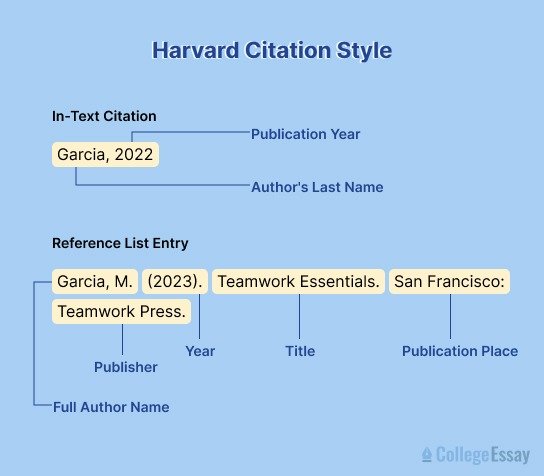
At its heart, Harvard is beautifully straightforward. Its in-text citations are remarkably concise, featuring just the author's last name and the year of publication.
- In-text citation example: (Smith, 2023) or Smith (2023) argued that...
- For a direct quote: (Smith, 2023, p. 45)
This immediate author-date link makes it incredibly easy for readers to quickly identify the source within your text and then jump to the alphabetical reference list for full details.
What Harvard's Reference List Looks Like
The reference list, typically titled "References" or "Reference List," provides the full bibliographic information. Sources are listed alphabetically by author's surname.
- Journal Article Format Example:
Author(s) (Year) 'Title of the article', Title of the Journal, Volume(Issue), Page numbers. - Example: Davies, A. (2020) 'The future of remote work environments', Journal of Modern Management, 15(2), pp. 112-128.
- Book Format Example:
Author(s) (Year) Title of Book. Edition (if applicable). Place of publication: Publisher. - Example: Johnson, K. (2018) Innovation in the Digital Age. London: Tech Press.
- Website Format Example:
Author(s) or Corporate Author (Year) Title of document or page. Available at: URL (Accessed: Day Month Year). - Example: World Health Organization (2023) Global health trends 2023. Available at: https://www.who.int/trends (Accessed: 15 October 2023).
Harvard Style's emphasis on readability and quick source identification makes it a popular choice for disciplines that prioritize the recency and authorship of research, such as economics, business, and some natural sciences, particularly outside North America.
Harvard's Close Cousin: APA Style
While distinct, APA Style (American Psychological Association) can be thought of as a highly refined and formalized variant of the Harvard author-date system. It's the undisputed champion in social sciences, psychology, education, and many health-related fields across North America and beyond. Where Harvard can have institutional variations, APA is governed by a single, comprehensive manual (currently the 7th edition), offering incredibly detailed guidelines for not just citations, but also manuscript formatting, headings, tables, and even bias-free language.
The Familiarity of APA's In-Text Citations
Like Harvard, APA uses the author-date format for in-text citations. The primary difference often lies in specific punctuation and how multiple authors are handled.
- In-text citation example: (Smith & Johnson, 2023) or Smith and Johnson (2023) found that...
- For a direct quote: (Smith & Johnson, 2023, p. 145) or (Smith & Johnson, 2023, para. 3) for online sources without page numbers.
Notice the ampersand (&) for multiple authors within parentheses, but "and" when authors are part of the narrative text.
APA's Detailed Reference List
The APA reference list, titled "References," is known for its precision and attention to detail. It includes DOIs or URLs for most online sources, and follows specific capitalization rules (e.g., only the first word of a title/subtitle and proper nouns are capitalized in article/book titles). If you're looking to generate Harvard style citations but find yourself needing APA, you'll see many structural similarities, but distinct formatting rules.
- Journal Article Format Example:
Author(s). (Year). Title of the article. Title of the Journal, Volume(Issue), Page numbers. DOI or URL. - Example: Davies, A. (2020). The future of remote work environments. Journal of Modern Management, 15(2), 112–128. https://doi.org/10.xxxx/yyyy.
- Book Format Example:
Author(s). (Year). Title of book. Publisher. - Example: Johnson, K. (2018). Innovation in the digital age. Tech Press.
- Website Format Example:
Author(s) or Corporate Author. (Year, Month Day). Title of page. Site Name. URL - Example: World Health Organization. (2023, October 15). Global health trends 2023. https://www.who.int/trends
The rigor of APA ensures a standardized presentation, which is crucial for the empirical research common in the social sciences. For more detailed guidance, you might find resources on mastering APA Style helpful.
Shifting Gears: MLA Style for the Humanities
Stepping away from the author-date family, we encounter MLA Style (Modern Language Association), the preferred format for disciplines within the humanities, particularly literature, language studies, cultural studies, and philosophy. MLA prioritizes the author and the specific location (page number) within a work, reflecting the common practice of close textual analysis in these fields.
The Simplicity of MLA's In-Text Citations
MLA's in-text citations are incredibly streamlined, typically comprising just the author's last name and the page number where the information was found. The publication year is omitted from the in-text citation, as precise dating is often less critical than specific textual location in literary analysis.
- In-text citation example: (Smith 25) or Smith argues that... (25).
- For multiple authors (same format as single): (Smith and Johnson 45-60)
The "Works Cited" Page: MLA's Reference List
MLA uses a "Works Cited" page, which lists only the sources actually referenced in your paper. It emphasizes the container system, meaning a source (e.g., an article) exists within a larger container (e.g., a journal or website), which might itself be part of a larger container (e.g., a database).
- Journal Article Format Example:
Author(s). "Title of the article." Title of the Journal, vol. Volume, no. Issue, Year, Page numbers. Database or URL. - Example: Davies, Alex. "The Future of Remote Work Environments." Journal of Modern Management, vol. 15, no. 2, 2020, pp. 112-28. JSTOR.
- Book Format Example:
Author(s). Title of Book. Publisher, Year. - Example: Johnson, Katherine. Innovation in the Digital Age. Tech Press, 2018.
- Website Format Example:
Author(s) or Corporate Author. "Title of page." Site Name, Day Month Year, URL. - Example: World Health Organization. "Global Health Trends 2023." WHO, 15 Oct. 2023, www.who.int/trends.
The minimalist approach of MLA's in-text citations helps maintain the flow of textual analysis, while the "Works Cited" page provides all necessary retrieval information. Further insights into navigating MLA citations can help you master this style.
The Versatile Scholar: Chicago Style
Chicago Style, published by the University of Chicago Press in The Chicago Manual of Style (CMOS), is renowned for its flexibility and comprehensiveness. It offers two distinct systems tailored for different academic needs, making it a truly versatile choice, particularly in history, some social sciences, and the arts.
Two Paths to Citation: Notes-Bibliography vs. Author-Date
This is where Chicago truly stands out. You typically choose one system for your entire paper:
- Notes-Bibliography System (NB): This is primarily used in the humanities (history, literature, art history, religious studies).
- In-text: Uses superscript numbers (like footnote/endnote indicators) that correspond to numbered notes at the bottom of the page (footnotes) or at the end of the chapter/paper (endnotes). These notes contain the full citation information the first time a source is cited, and a shortened version for subsequent citations.
- Reference List: A comprehensive "Bibliography" at the end lists all cited sources alphabetically, often including sources consulted but not directly cited.
- Author-Date System: This is preferred in the physical, natural, and social sciences.
- In-text: Functions much like Harvard or APA, with parenthetical author-date citations.
- Reference List: A "References" list at the end provides full bibliographic details, similar in content but distinct in formatting from APA.
Chicago's Citation Examples
Let's look at how a journal article might be cited under each system:
Notes-Bibliography System:
- Footnote (first reference):
- A. Davies, “The Future of Remote Work Environments,” Journal of Modern Management 15, no. 2 (2020): 115.
- Footnote (subsequent reference):
- Davies, “Remote Work Environments,” 118.
- Bibliography Entry:
Davies, Alex. “The Future of Remote Work Environments.” Journal of Modern Management 15, no. 2 (2020): 112-28.
Author-Date System: - In-text citation: (Davies 2020, 115)
- Reference List Entry:
Davies, Alex. 2020. “The Future of Remote Work Environments.” Journal of Modern Management 15 (2): 112–28.
As you can see, Chicago's Notes-Bibliography system offers a rich, detailed citation within the notes themselves, allowing for explanatory comments if needed, which is valuable in fields like history. The Author-Date system, on the other hand, provides the scientific conciseness needed for other disciplines. Deciding between Chicago's Notes-Bibliography vs. Author-Date systems is crucial for your paper's field and scope.
A Niche Player: IEEE Style
While the core comparison is between Harvard, APA, MLA, and Chicago, it's worth briefly mentioning IEEE Style (Institute of Electrical and Electronics Engineers) as another major player, though in very specific fields.
IEEE is predominantly used in technical disciplines like engineering, computer science, and information technology. It employs a distinctive numbered citation system where sources are assigned a number in brackets, sequentially, based on their first appearance in the text.
- In-text citation example: ...according to recent research [1].
- Reference list entry example (for a journal article):
[1] A. Brown and B. Hadinson, "Understanding the Impact of Climate Change on Soil," Environmental Science Review, vol. 19, no. 3, pp. 321-335, 2019.
The numerical system is efficient for technical papers where brevity and quick referencing to a large body of sources are paramount. It's a stark contrast to the author-date or author-page systems, highlighting how discipline-specific needs drive citation style development.
Choosing Your Citation Style: A Strategic Guide
Navigating the array of citation styles doesn't have to be a bewildering experience. It's primarily about understanding the context of your writing. Here’s a strategic approach to selecting the correct citation format every time:
1. Identify Discipline Requirements
This is often the most significant factor. Academic fields have developed preferences over time because certain styles better serve their research methodologies and communication norms:
- Social Sciences & Education (Psychology, Sociology, Business, Nursing): Almost invariably APA Style.
- Humanities (Literature, Language, Philosophy, Art History): Typically MLA Style or Chicago (Notes-Bibliography).
- History & Some Social Sciences: Often Chicago Style (either system, but Notes-Bibliography is common for history).
- Natural Sciences (Biology, Chemistry, Physics): Varies widely; some use APA, some use specific journal styles (e.g., ACS for chemistry), and sometimes Chicago Author-Date.
- Engineering & Computer Science: Predominantly IEEE.
- Economics, Business, Law (UK/Australia): Often Harvard Style.
Knowing your field narrows down the options considerably.
2. Check Professor, Institutional, or Journal Guidelines (The Golden Rule!)
Regardless of discipline, the single most important rule is to always defer to the specific instructions provided by your professor, institution, or the journal you are submitting to. These guidelines override everything else. A professor might mandate APA even for a literature course, or a specific journal might have a proprietary house style. Ignoring these instructions is a surefire way to lose points or face rejection.
3. Consider Collaborative Projects
When working in a team, agreeing on a single citation style from the outset is non-negotiable. Inconsistency within a collaborative paper is a nightmare to correct and undermines the professionalism of the final submission. Make this decision early and communicate it clearly.
4. Prioritize Consistency & Familiarity
Once you've chosen a style (or had one chosen for you), stick with it rigorously. The biggest sin in citation is inconsistency. While you might not know every nuance of a style, choose one you can comfortably apply consistently throughout your entire work. The more you use a style, the more familiar you'll become, which speeds up the process and reduces errors.
5. Leverage Software & Online Tools
Don't go it alone! Modern citation management software can be a lifesaver. Tools like Zotero, EndNote, Mendeley, and even built-in features in word processors can help you:
- Collect and organize sources: Keep track of your research materials.
- Generate citations automatically: Input source details once and let the software format it according to your chosen style.
- Switch styles: If you need to reformat a paper from APA to MLA, these tools can often do it with a few clicks (though always review the output!).
These tools are especially useful for long projects with many sources. You can learn more about choosing the right citation management software to streamline your process.
Common Pitfalls and How to Avoid Them
Even with the best intentions, citation errors are common. Being aware of these traps can save you time and frustration:
- Inconsistency within a Single Paper: This is perhaps the most frequent error. Mixing Harvard-style in-text citations with APA-style reference list entries, or using different formatting for identical source types, screams carelessness.
- Solution: Choose one style and stick to it religiously. Use a style guide (like the official APA manual or your university's Harvard guide) as your bible.
- Missing Information in References: A citation is only useful if it contains enough detail for a reader to find the original source. Forgetting a page range, a publication date, or a DOI renders a reference incomplete.
- Solution: Double-check every entry against the style guide. When you collect a source, capture all relevant bibliographic information immediately.
- Accidental Plagiarism: Even if you intend to cite, incorrectly quoting, paraphrasing without attribution, or failing to differentiate between your ideas and a source's can lead to plagiarism charges.
- Solution: When taking notes, clearly mark direct quotes. Always attribute ideas that aren't your own, even if you rephrase them. When in doubt, cite.
- Over-reliance on Automatic Generators Without Review: While tools like a Harvard style citation generator are incredibly helpful, they are not infallible. They sometimes misinterpret data, miss specific nuances of a style, or don't handle unusual source types well.
- Solution: Always proofread automatically generated citations against the official style guide. Use the generator as a starting point, not a final answer.
- Citing Secondary Sources as Primary: Citing a textbook that discusses an original study, but presenting it as if you read the original study yourself, is misleading.
- Solution: Always try to find and read the original (primary) source. If you must cite a secondary source discussing a primary one, make it clear (e.g., "Smith (2020) as cited in Jones (2022)...").
Streamlining Your Citation Process: Practical Steps for Success
Citations might seem like a daunting task, but with a structured approach, they can become a seamless part of your writing workflow.
1. Start Early, Stay Organized
Don't wait until the last minute to compile your bibliography. As you research:
- Capture details immediately: When you find a useful source, record all its bibliographic information right then and there. Use a consistent method, whether it's a simple spreadsheet, a Word document, or a dedicated citation manager.
- Note-taking with citations: When you take notes, include the in-text citation alongside the information or quote. This prevents confusion later on.
2. Master the Basics of Your Chosen Style
You don't need to memorize every rule, but understanding the core patterns for common source types (books, journal articles, websites) will save you immense time. Focus on:
- In-text format: Author-date? Author-page? Numbered?
- Reference list order: Alphabetical by author.
- Key punctuation and capitalization rules: Commas, periods, italics, quotation marks.
3. Proofread, Proofread, Proofread!
Once your paper is complete, dedicate specific time to review your citations. Read through your in-text citations and then your full reference list separately. Check for:
- Matching: Does every in-text citation have a corresponding entry in your reference list, and vice versa?
- Accuracy: Are all names, dates, titles, and page numbers correct?
- Consistency: Are all entries formatted exactly according to your chosen style?
- Completeness: Is all necessary information present for each source?
4. Seek Help When Needed
Citation styles can be complex, and it's perfectly normal to encounter tricky sources or confusing rules. Don't hesitate to:
- Consult your university's writing center: They often have experts who can review your citations.
- Use online style guides: Websites like Purdue OWL are excellent, reliable resources for various styles.
- Ask your professor: If you're genuinely stumped by a specific citation scenario, seek clarification.
Ultimately, mastering citation styles is about building good academic habits. It's a skill that will serve you throughout your academic and professional life, enhancing your credibility and ensuring that your work stands on a foundation of integrity. By understanding the core differences between Harvard, APA, MLA, and Chicago, and by diligently applying the rules, you empower yourself to write with clarity, confidence, and scholarly precision.