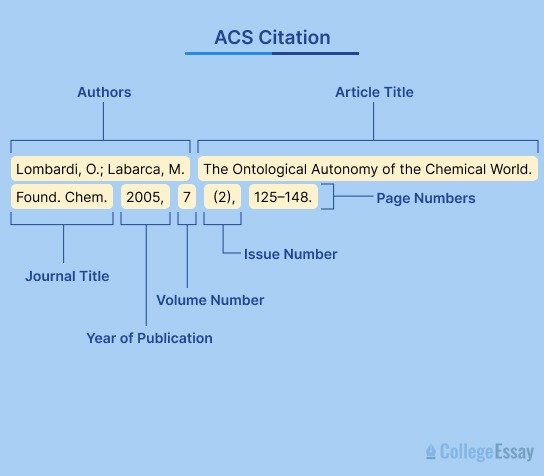
Navigating the labyrinth of academic citation styles can feel like deciphering an ancient scroll, especially when it comes to the Manual Harvard Citation Guide for All Source Types Simplified. But what if it didn't have to be a bewildering chore? What if, instead, you could approach it with a clear roadmap, understanding the "why" behind the "what," and confidently integrate your sources with precision and academic integrity?
This isn't just another dry manual. Think of me as your seasoned guide, cutting through the jargon to offer you a human-first, practical walkthrough of Harvard referencing. We’ll demystify the rules, provide crystal-clear examples, and equip you with the knowledge to cite any source type like a pro.
At a Glance: Your Harvard Citation Toolkit
Before we dive deep, here are the core principles you’ll master:
- Two Parts: Harvard referencing always involves an in-text citation (brief) and a reference list entry (detailed).
- In-text Basics: Author’s surname, publication year, and page number(s) (e.g., Smith 2020, p. 45).
- Reference List Order: Alphabetical by author, then by date if the same author.
- Completeness: Every in-text citation must have a corresponding full entry in the reference list.
- Consistency is Key: Once you pick a format variation, stick to it throughout your work.
- Source Specificity: Different source types (books, articles, websites) have unique reference list formats.
Why Harvard? The Philosophy Behind the Format
Harvard referencing isn't just about following rules; it's about intellectual honesty and scholarly communication. This author-date style, one of the oldest and most widely used, serves several critical purposes:
- Credibility: It allows readers to immediately see whose ideas you’re building upon, lending weight to your arguments.
- Transparency: Anyone can trace your sources back to their origin, verifying your research and exploring the topic further.
- Academic Integrity: It prevents plagiarism by giving proper credit where it’s due, upholding the ethical standards of scholarship.
- Readability: The in-text system is non-intrusive, keeping the flow of your writing smooth while still providing essential source information.
Understanding this foundational philosophy makes the specific rules less arbitrary and more logical. Let’s start with the immediate impact your sources will have on your readers: the in-text citation.
The Two Pillars of Harvard: In-Text Citations
In-text citations are your quick nods to the original author within the body of your paper. They appear directly after a quote, paraphrase, or summary, signaling to your reader that the information came from an external source.
The basic format is elegantly simple: (Author's Surname, Year of Publication, Page Number(s)).
- Use
p.for a single page (e.g., p. 23) andpp.for a range of pages (e.g., pp. 23-25). - If you mention the author's name in your sentence, you only need to include the year and page number in parentheses: "Smith (2020, p. 45) argues that..."
Let's break down the common scenarios you'll encounter:
Handling Multiple Authors in Your Text
Academic work often involves collaborative research, so you’ll frequently cite sources with more than one author.
- Two or Three Authors: List all surnames in the order they appear on the title page, separated by an ampersand (&) before the last name.
- (Malinowski, Miller & Gupta 1995)
- Four or More Authors: To keep your text uncluttered, use the first author’s surname followed by "et al." ("et al." is Latin for "and others").
- (Bond et al. 1996)
- Tip: Remember to use "et al." even if you mention the first author in your sentence: "Bond et al. (1996) found that..."
- Two or More Works by Different Authors at One Point: If you're drawing from multiple distinct sources to support a single point, list them alphabetically by author, separating each citation with a semicolon.
- (Larsen 2000; Malinowski 1999)
- Citing Multiple Works by the Same Author in the Same Year: If an author has published more than one relevant work in the same year, you differentiate them by adding a lowercase letter (a, b, c, etc.) after the year. This letter corresponds to the alphabetical order of the titles of those works in your reference list.
- (Bond 1991a), (Bond 1991b)
- Citing Different Editions of the Same Work: If you’ve referenced different editions of the same work by the same author, you can consolidate them. Include the author(s)’s name once, followed by all appropriate dates separated by semicolons.
- (Jones 1998; 2005)
When Author Information Isn't Straightforward
Sometimes, the traditional "author" isn't a person, or perhaps the information is missing.
- No Author: If a specific author isn't listed, try to identify the organization responsible for the work. Otherwise, use the source's title (or a shortened, italicized version if it's long) in place of the author.
- (Australian Bureau of Agricultural and Resource Economics 2001)
- (A history of Greece 1994)
- (Improve indigenous housing 2007)
- Note: If you need to include page numbers for a source without a listed author, append them after the title and year:
(A history of Greece 1994, pp. 10-12). - Editor(s): When a book has an editor (or editors) instead of a primary author for the whole work, you use "ed." or "eds." in your in-text citation.
- (ed. Jones 1998)
- (eds Bullinger & Warnecke 1985)
- Translator: If a work has been translated, you acknowledge the translator in the reference list, but typically the in-text citation still refers to the original author. If the translator's role is particularly significant to your discussion, you can include them.
- (Colorado, trans. Smith 2006)
- No Date: If a publication date isn't available, use the abbreviation "n.d." (no date) in place of the year.
- (Jones, n.d.)
Special Cases for In-Text Citations
Some situations call for unique approaches to ensure proper attribution.
- Secondary Source (Cited in): Ideally, you should always consult the original source. However, if you can only access a work through another source that cited it, you must acknowledge this. List the original author and year, then "cited in" the author and year of the source you actually read.
- (O'Reilly, cited in Byrne 2008)
- Important: Only the secondary source (Byrne 2008 in this example) will appear in your reference list.
- Personal Communication: This includes interviews, phone calls, emails, or informal discussions. Because these sources are typically unrecoverable by your reader, they are usually documented only in the text and not included in your reference list. Provide the communicator's name, the year, and "pers. comm." (personal communication), along with the date if relevant.
- (Mr M Ward, 2008, pers. comm., 6 June)
Practical Tips for In-Text Citations
- Be Consistent: Decide whether you prefer author-prominent (e.g., "Smith (2020) argued...") or information-prominent (e.g., "A key argument suggests (Smith 2020)...") and stick to it.
- Placement Matters: Place the citation as close as possible to the information it refers to, ideally before the punctuation mark at the end of the sentence or clause.
- Direct Quotes: Always include page numbers for direct quotes.
- Paraphrases: While page numbers aren't strictly mandatory for paraphrases, it's good practice to include them, especially when referring to a specific section or idea within a longer work. It helps your reader locate the original discussion.
The Backbone: Crafting Your Harvard Reference List
While in-text citations offer a quick glimpse, the reference list provides the full bibliographic details of every source you've used. This comprehensive list, located on a separate page at the end of your document, allows your readers to easily find and retrieve your sources.
Core Principles of the Harvard Reference List
- Completeness: Every single source cited in your text must appear in your reference list, and vice-versa. No exceptions.
- Alphabetical Order: Arrange all entries alphabetically by the author's surname. If a source has no author, use the first significant word of its title (ignoring articles like "A," "An," or "The").
- Same Author, Multiple Works: If you have multiple works by the same author:
- Order them chronologically by publication date (earliest first).
- If works are from the same year, order them alphabetically by title and append a lowercase letter (a, b, c) after the date, matching your in-text citations.
- Example:
- Bond, WR 1991a, Article Title A, ...
- Bond, WR 1991b, Article Title B, ...
- Bond, WR 1996, Another Book, ...
- Formatting:
- The entire list should typically be double-spaced.
- For entries spanning multiple lines, use a hanging indent (where the first line is flush left, and subsequent lines are indented). This enhances readability.
- Titles of books, journals, and websites are usually italicized.
Key Components of a Reference List Entry
While formats vary by source type, most entries include these core elements:
- Author(s) / Editor(s): Surname, Initial(s).
- Year of Publication: (Year)
- Title: Title of Work (italicized for books, journals, websites, etc.).
- Edition: (if applicable, e.g., 2nd edn.)
- Place of Publication: City, State/Country.
- Publisher: Name of the publisher.
- For Articles: Journal Title, Volume, Issue/Number, Page Range.
- For Online Sources: [Online], Available at: URL (Accessed: day month year).
Now, let's explore the specific formats for various source types.
Your Go-To Guide: Harvard Reference Examples by Source Type
This section provides definitive examples for the most common source types you'll encounter. Pay close attention to the punctuation, capitalization, and italicization for each.
A. Books & E-books
Books are foundational academic sources. Their citation requires details about the author, title, publisher, and place of publication.
- Book: Single Author
Author surname(s), initial(s). (Year Published). Title. Edition. Place of publication: publishers.
Example: Holt, DH 1997, Management principles and practices, Prentice-Hall, Sydney. - Book: 2 or 3 Authors
McCarthey, EJ, William, DP & Pascale, GQ 1997, Basic marketing, Irwin, Sydney. - Book: More Than 3 Authors
Bond, WR, Smith, JT, Brown, KL & George, M 1996, Management of small firms, McGraw-Hill, Sydney. - Book: No Author
A history of Greece 1994, Irwin, Sydney. - Book: Editor(s)
Editor surname(s), initial(s). (eds.) (Year Published). Title. Edition. Place of publication: publishers.
Example: Jones, MD (ed.) 1998, Management in Australia, Academic Press, London. - Book: Translator & Author
Colorado, JA 2006, Economic theory in the Mexican context: recent developments on the ground, trans. K Smith, Oxford University Press, Oxford. - Book: Organisation as Author
Australian Bureau of Agricultural and Resource Economics 2001, Aquaculture development in Australia: a review of key economic issues, ABARE, Canberra. - Book: Chapter or Article in Edited Book
Chapter author surname(s), initial(s). (Year Published) ‘Chapter title’ in Editor surname(s), initial(s). (ed.) Title of edited book. Edition. Place of publication: publishers, page number(s).
Example: Milkman, R 1998, 'The new American workplace: high road or low road?' in Thompson, P & Warhurst, C (eds) Workplaces of the future, Macmillan Press, London, pp. 22-34. - E-book (Online)
Author surname(s), initial(s). (Year Published). Title. [online]. Available at: URL (Accessed: day month year).
Example: Aghion, P & Durlauf, S (eds.) 2005, Handbook of economic growth, Elsevier, Amsterdam. Available from: Elsevier books. [4 November 2004]. - E-book (E-book reader)
Author surname(s), initial(s). (Year Published). Title. Edition. E-book format [e-book reader]. Available at URL or DOI (Accessed: day month year).
B. Journal Articles
Journal articles are crucial for current research and specialized topics. Pay close attention to volume, issue, and page numbers.
- Print Journal Article
Author surname(s), initial(s). (Year) ‘Article Title’, Journal Title, volume(issue/season), page number(s).
Example: Conley, TG & Galeson, DW 1998, 'Nativity and wealth in mid-nineteenth century cities', Journal of Economic History, vol. 58, no. 2, pp. 468-493. - Online Journal Article (Electronic Database)
Author surname(s), initial(s). (Year) ‘Title of article’, Title of journal, volume(issue/season) [online]. Available at: URL or DOI (Accessed: day month year).
Example: Liveris, A 2011, 'Ethics as a strategy', Leadership Excellence, vol. 28, no. 2, pp.17-18. Available from: Proquest [23 June 2011].
C. Internet/Websites
The internet is a vast source, but citation requires careful attention to authorship, date, and retrieval details to ensure reliability.
- Website
Author surname(s), initial(s). (Year of publishing) Title of page/site [Online]. Available at: URL (Accessed: day month year).
Example: Australian Securities Exchange 2009, Market Information. Available from: http://www.asx.com.au [5 July 2009]. - Webpage: No Author
Improve indigenous housing now, government told, 2007. Available from: http://www.abc.net.au/news/stories/2007/11/27/2103504.htm [8 February 2009]. - Webpage: No Date
Jones, MD n.d., Commentary on indigenous housing initiatives. Available from: http://www.jmd.org.au/housing.html [6 June 2009]. - Blog
Newton, A. 2007, Newcastle toolkit. 16 January 2007. Angela Newton: Blog. Available from: http://angelanewton.wordpress.com/2007/01/16/newcastle-toolkit/ [23 February 2007]. - Computer Software
OpenOffice.org, computer software 2005. Available from: http://www.openoffice.org [11 January 2005]. - Web Based Image / Table / Figure
The Lunar Interior, 2000. Available from: http://www.planetscapes.com/solar/eng/moon/moonin.gif [28 November 2000].
D. Company Information
Company reports and financial data provide valuable business insights.
- Company Report
Aspect Huntley DatAnalysis 2009, National Australia Bank Limited Company Report. Available from: Aspect Huntley DatAnalysis. [20 May 2009]. - Company Profile
Datamonitor 2009, Wesfarmers Limited Company Profile. Available from: Business Source Premier. [20 May 2009]. - Financial Data
Datastream, 2009, S &PASX200 daily index data 2000-2009. Available from: Datastream. [20 May 2009].
E. Conference Papers & Proceedings
These sources capture cutting-edge research presented at academic conferences.
- Print Proceeding Paper
Riley, D 1992, 'Industrial relations in Australian education', in Blackmur, D (ed.) Contemporary Australasian industrial relations: proceedings of the sixth AIRAANZ conference, AIRAANZ, Sydney, pp. 124-140. - Electronic Proceeding Paper
Fan, W, Gordon, MD & Pathak, R 2000, 'Personalization of search engine services for effective retrieval and knowledge management', Proceedings of the twenty-first international conference on information systems, pp. 20-34. Available from: ACM Portal: ACM Digital Library. [24 June 2004]. - Unpublished Proceeding Paper
Brown, S & Caste, V 2004, 'Integrated obstacle detection framework'. Paper presented at the IEEE Intelligent Vehicles Symposium, IEEE, Detroit MI.
F. Newspapers
Newspaper articles are excellent for current events and public opinion, whether in print or online. Remember that in-text-only newspaper citations (no author, no title) do not require a reference list entry.
- Print Newspaper
Author surname(s), initial(s). (Year) ‘Article Title’, Newspaper Title (edition), day month, page number(s).
Example: Ionesco, J 2001, 'Federal election: new Chip in politics', The Advertiser 23 October, p. 10. - Online Newspaper (Electronic Database)
Author surname(s), initial(s). (Year) ‘Article Title’, Newspaper Title (edition), day month [online]. Available at: URL or DOI (Accessed: day month year).
Example: Meryment, E 2006, 'Distaff winemakers raise a glass of their own to their own', The Australian, 7 October, p. 5. Available from: Factiva. [2 February 2007]. - Newspaper from a Website
Hilts, PJ 1999, 'In forecasting their emotions, most people flunk out', The New York Times 16 February. Available from http://www.nytimes.com/pages/science/index.html [19 February 2000]. - Newspaper: No Author (In-Text Only)
For a general newspaper article with no specified author and found in print, you might only cite it in the text.
(The Sydney Morning Herald 7 January 2011, p. 12).
No reference list entry is required for this specific case.
G. Multimedia
From videos to music to podcasts, multimedia sources are increasingly common in academic work.
- Video Recording
Effective performance appraisals 1994, (video recording), Melbourne, Educational Media Australia. - Television Programme
‘Episode title’ (Year of broadcast) Program Title, Series number, episode number. Channel, day month year.
Example: Crystal, L (executive producer) 1993, The MacNeil/Lehrer news hour (television broadcast) 11 October 1993, New York and Washington DC, Public Broadcasting Service. - Audio Podcast
Van Nuys, D (producer) 2007, 'The anatomy of a lobotomist [Show 84]', Shrink Rap Radio (podcast). Available from: http://www.shrinkrapradio.com/show-84-the-anatomy-of-a-lobotomist/ [11 April 2007]. - Video Podcast
Kloft, M (producer/director) 2006, The Nuremberg trials American experience (podcast). Available from: http://www.pbs.org/wgbh/amex/nuremberg/podcast/index.html [4 March 2006]. - Music Track from an Album
Artist (Year of release) 'Track title', on Album title [Medium]. Place of production: Label.
Example: Shocked, M 1992, 'Over the waterfall', on Arkansas Traveller (CD). New York, Polygram Music. - Video Blog Post
Norton, R 2006, 'How to train a cat to operate a light switch' (video file). Available from: http://www.youtube.com/watch?v=V0rp3KjD-a0 [4 November 2006]. - Online Photograph
Photograph surname, initial. (Year of publication) Title of photograph [online]. Available at: URL (Accessed: day month year). - Film
Film Title (Year of release) Directed by Director's name [Film]. Place of production: Production Company.
H. Standards & Patents
For technical fields, standards and patents are critical documents that require precise citation.
- Patent
Cookson, AH 1985, Particle trap for compressed gas insulated transmission systems, US Patent 4554399. - Standard: Retrieved From a Database
Standards Australia 2008, Personal floatation devices - General requirements. AS 4758.1-2008. Available from: Standards Australia Online. [1 December 2008]. - Standard: Published
Standards Australia 1994, Information processing - text and office systems - office document architecture (ODA) and interchange format: part 10: formal specifications, AS/NZS 3951.10:1994, Standards Australia, NSW.
I. Other Sources
This category captures a range of other academic and instructional materials.
- CMO Article (Course Materials Online)
Jennings, P 1997, 'The performance and competitive advantage of small firms: a management perspective', International Small Business Journal, vol. 15, no. 2, pp. 63-75. Available from: The University of Western Australia Library Course Materials Online. [1 September 2004]. - Lecture Notes
Foster, T 2004, Balance sheets, lecture notes distributed in Financial Accounting 101 at The University of Western Australia, Crawley on 2 November 2005. - Thesis (Unpublished)
Hos, JP 2005, Mechanochemically synthesized nanomaterials for intermediate temperature solid oxide fuel cell membranes. Ph.D thesis, University of Western Australia. - Thesis (Published)
May, B 2007, A survey of radial velocities in the zodiacal dust cloud. Bristol UK, Canopus Publishing. - Thesis (Retrieved From a Database)
Baril, M 2006, A distributed conceptual model for stream salinity generation processes: a systematic data-based approach. WU2006.0058. Available from: Australasian Digital Theses Program. [12 August 2008].
Mastering the Nuances: Advanced Tips & Troubleshooting
While the examples above cover the vast majority of your needs, a few overarching principles will elevate your Harvard referencing game from good to excellent.
Consistency is King
This cannot be stressed enough. Harvard, like other styles, has variations. Your university or department might have a specific handbook or guide that dictates slightly different conventions (e.g., whether to include publishers' locations, or very specific formatting for certain online sources). The most critical rule is to choose one consistent set of rules and apply them rigorously throughout your entire document. A well-cited paper is a consistent paper.
Don't Let Perfect Be the Enemy of Good
It's easy to get bogged down in the minutiae. If you're struggling to find the exact format for an obscure source, focus on providing as much information as possible in a clear, consistent manner, following the closest available example. The goal is always to allow your reader to easily locate the source.
Utilizing Tools (Wisely)
While this guide emphasizes the manual aspect to foster deep understanding, there are times when tools can be incredibly helpful for efficiency. After you've mastered the foundational principles, leveraging technology can streamline your workflow. When you're confident in the basics, you might look for platforms that can generate Harvard style citations for you, saving time on repetitive formatting tasks and helping to ensure accuracy, especially for common source types. Just be sure to always double-check the output against your institution's specific guidelines.
Common Pitfalls to Avoid
- Incomplete Information: Always gather all necessary details (author, year, title, publisher, URL, access date, page numbers, etc.) before you start writing.
- Missing Entries: Every in-text citation must have a reference list entry, and every reference list entry must have at least one corresponding in-text citation.
- Incorrect Ordering: Double-check your alphabetical and chronological ordering in the reference list.
- Formatting Errors: Pay close attention to italics, commas, periods, and parentheses. A misplaced comma can change the meaning or render a citation incorrect.
- Date Discrepancies: Ensure the year in your in-text citation exactly matches the year in your reference list entry.
Your Next Step to Citation Confidence
You've now armed yourself with a comprehensive understanding of the Manual Harvard Citation Guide for All Source Types. This guide has laid out the structure, the rules, and a wealth of examples to navigate the academic landscape with assurance. No longer should Harvard feel like an insurmountable obstacle, but rather a clear path to demonstrating the depth and integrity of your research.
The key now is practice. The more you apply these principles, the more intuitive they will become. Keep this guide handy, refer to the examples, and remember that every successful citation adds another layer of credibility to your work. Go forth and cite with confidence!