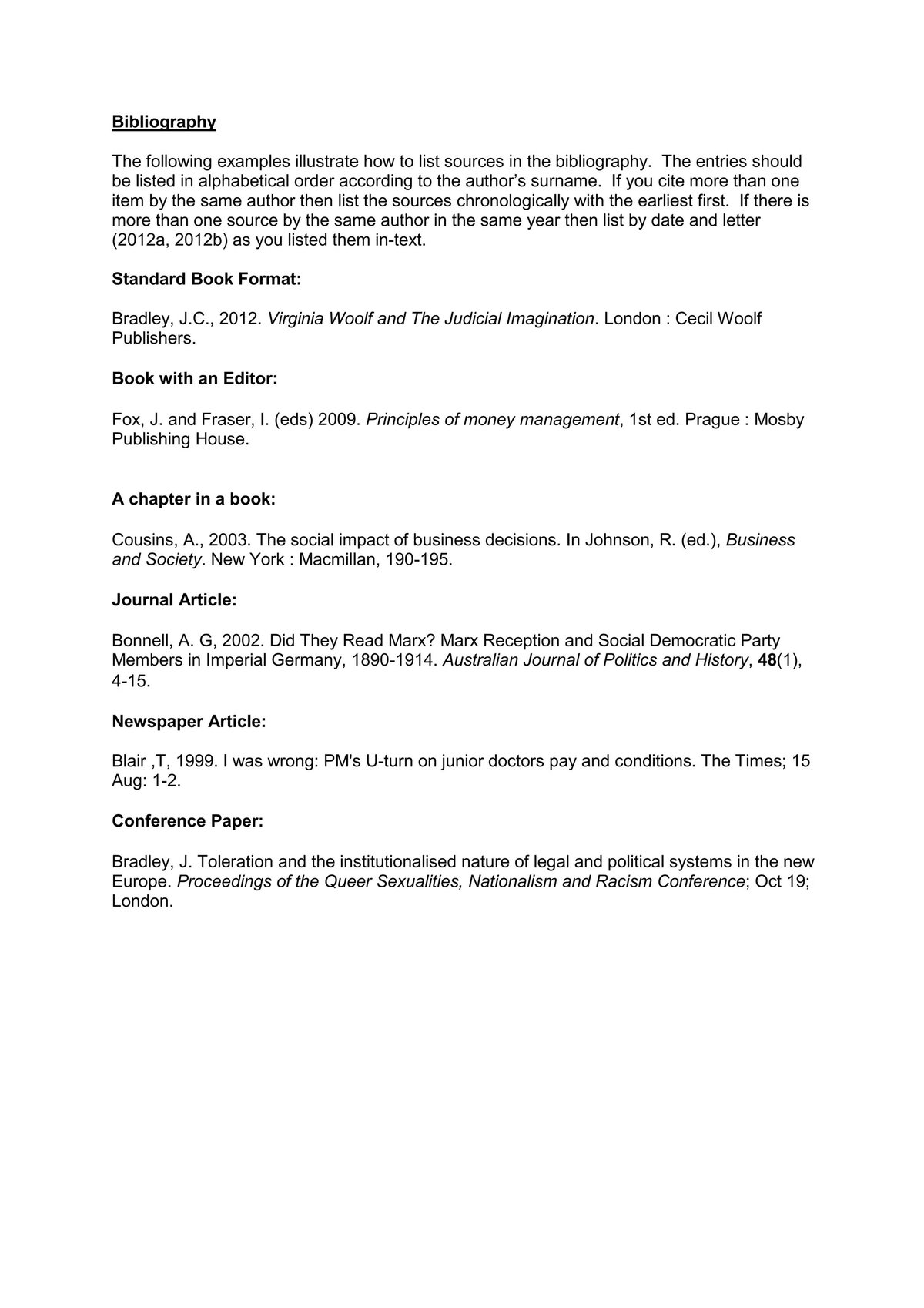
Imagine pouring weeks into a research paper, crafting brilliant arguments, and unearthing profound insights, only for it to be marred by citation errors. Frustrating, right? Academic referencing isn't just a bureaucratic hurdle; it's the bedrock of scholarly integrity, a way to acknowledge intellectual debts, and a crucial tool for your readers to verify your sources. Among the many styles out there, Understanding Harvard Referencing Style stands out as a widely adopted, clear, and logical system, especially prevalent in UK universities and disciplines like social sciences, humanities, and business studies.
If the thought of referencing makes your palms sweat, take a deep breath. This comprehensive guide is designed to demystify Harvard style, breaking down its components into digestible, actionable steps. Think of it as your trusted editor, coaching you through the nuances so you can cite with confidence and precision.
At a Glance: Your Quick Guide to Harvard Referencing
- Author-Date System: Harvard referencing primarily uses an author-date approach for in-text citations.
- Two Core Parts: Every source you use requires an in-text citation (brief mention in your writing) and a full entry in a reference list at the end.
- Consistency is Key: The golden rule is to apply the same formatting consistently throughout your entire document.
- Alphabetical Order: Your reference list must be sorted alphabetically by the author's last name.
- University-Specific Guidelines: Always double-check your institution's specific Harvard style guide, as minor variations can exist.
- Avoid Plagiarism: Proper referencing protects you from unintentional plagiarism and enhances your academic credibility.
Why Harvard? Demystifying the Author-Date System
At its heart, Harvard referencing is a transparent and efficient way to give credit where it's due. It’s known as an “author-date” style because its in-text citations prominently feature the author’s last name and the year of publication. This simple system allows readers to quickly identify the source of information without disrupting the flow of your writing.
The Harvard method neatly divides your citation task into two complementary parts:
- In-Text Citations: Short, parenthetical notes inserted directly into the body of your essay, paper, or thesis. These point directly to the specific information you've used.
- A Reference List (or Bibliography): A comprehensive list at the very end of your document, providing full publication details for every source you cited in your text. This allows readers to locate and consult your original sources easily.
The purpose is clear: to uphold academic honesty, demonstrate the breadth of your research, and empower others to explore the scholarly conversation you’re contributing to. It’s not just about rules; it’s about participating responsibly in the academic discourse.
Mastering In-Text Citations: The Core of Harvard Style
In-text citations are your brief nods to original sources, integrated seamlessly within your sentences. They act like signposts, guiding your reader to the fuller details in your reference list.
The Basics: Author, Year, Page
The most common format for an in-text citation involves the author's last name and the year of publication.
- (Author, Year): Use this when you're paraphrasing or summarizing an idea from a source.
- Example: Studies suggest that collaborative learning enhances student engagement (Johnson, 2020).
- (Author, Year, p. Page Number) or (Author, Year, pp. Page Range): This format is crucial when you are directly quoting, referring to a specific passage, or citing data found on particular pages.
- Example (single page): She argued that "the digital age has reshaped communication paradigms" (Smith, 2018, p. 45).
- Example (multiple pages): The report highlighted significant shifts in consumer behavior between 2019 and 2021 (Davies, 2022, pp. 12-15).
- Key takeaway: Use 'p.' for a single page and 'pp.' for multiple pages.
When the Author is Already in Your Sentence
Sometimes, you might naturally integrate the author's name into your sentence structure. In such cases, you only need to provide the year and page number (if applicable) in parentheses.
- Correct: Woolf introduces the complex relationship between memory and identity in her novel (2000, p. 5).
- Incorrect: Woolf introduces the complex relationship between memory and identity in her novel (Woolf, 2000, p. 5).
- Remember: Avoid redundancy; cite the author only once per instance.
Handling Multiple Authors
The number of authors dictates how you present them in your in-text citation:
- One author: (Davis, 2019)
- Two authors: (Davis and Barrett, 2019) – Always use "and", not an ampersand (&).
- Three authors: (Davis, Barrett and McLachlan, 2019)
- Four or more authors: (Davis et al., 2019) – Here, 'et al.' is Latin for 'and others'. This shorthand saves space and improves readability.
Navigating Sources Without Page Numbers
Not every source comes with neatly numbered pages. Websites, for instance, often lack this.
- For websites or online articles without page numbers: Simply omit the page number.
- Example: The latest policy updates were published recently (Government of Canada, 2023).
- For longer online sources where a specific section is relevant: Use an alternate locator like a subheading or paragraph number if available.
- Example: Economic reforms are expected to stimulate growth (Scribbr, para. 4).
- Example: The historical context is detailed under the "Early Influences" section (Museum Archive, 2021).
Citing Multiple Sources at One Point
When several sources support the same point, you can list them together within a single set of parentheses.
- Format: List citations separated by semicolons, ordered chronologically by publication date. If sources have the same year, then order alphabetically by author surname.
- Example: Various studies confirm the effectiveness of this approach (Singh, 2011; Davidson, 2015; Harding, 2018).
Same Author, Same Year? No Problem.
If you're citing multiple works by the same author published in the same year, you need a way to distinguish them.
- Solution: Add a lowercase letter (a, b, c, etc.) immediately after the year, both in your in-text citation and in your reference list entry.
- Example: Recent findings suggest an initial impact (Woodhouse, 2018a), followed by a sustained effect (Woodhouse, 2018b).
Corporate Authors: Giving Credit to Organizations
When an organization, government body, or company is the author, use its full name.
- Example: The latest statistics on global health trends were released (World Health Organization, 2023).
- Example: Environmental policies were updated last quarter (World for All, 2004).
When There’s No Author
If a source genuinely has no identifiable individual or corporate author, use the source's title in your in-text citation.
- If the source has a title: Use it in italics, or a shortened version if it's long.
- Example: The report highlighted significant challenges in urban planning (Conservation of Scrub Deserts, 2002).
- If the source is untitled but clearly identifiable: Use a shortened version in single quotes.
- Example: Current agricultural practices are under scrutiny ('Farm Productivity Report', 2021).
Secondary Referencing: Citing a Source within a Source
Sometimes, you encounter a fascinating idea or quote from Source A, but it’s actually cited within Source B. You haven’t read Source A directly. This is secondary referencing.
- Format: Acknowledge the original author (Source A) and then indicate where you found that information (Source B).
- Example: Varma argued that "cultural literacy is essential for global citizenship" (cited in Kirk, 2020).
- Important Note: In your reference list, you only include the source you actually read (Kirk, 2020, in this example). Use secondary referencing sparingly; always try to consult the original source if possible.
Building Your Reference List: The Comprehensive Record
The reference list is where your academic citations come full circle. It's an exhaustive, alphabetized directory of every source you've cited in your paper, providing all the necessary details for your readers to find those sources themselves.
The Blueprint: What Goes Where
- Location: Your reference list always appears at the very end of your document, on a new page. It's often titled "References" or "Reference List."
- Order: Every single source you’ve cited must be listed alphabetically by the author’s last name. If a source has no author, it's alphabetized by the first significant word of its title (excluding 'A', 'An', 'The').
- Entry Format: While specific formats vary by source type, a general rule is that each entry begins with the author’s last name, followed by their initial(s). Only the first word of the title (and any proper nouns) is capitalized, and titles of books and journals are typically italicized.
Dealing with Multiple Authors (Again!)
The rules for multiple authors are slightly different in the reference list compared to in-text citations:
- Up to three authors: List all authors in full, separated by commas, with 'and' before the last author.
- Example: Davis, J., Barrett, R. and McLachlan, S. (2019) Title of book. City: Publisher.
- Four or more authors: List only the first author, followed by ‘et al.’
- Example: Davis, J. et al. (2019) Title of book. City: Publisher.
No Publication Date? Here’s the Fix.
If a source lacks a clear publication date, you’ll use 'no date' in place of the year.
- Example: Scribbr (no date) How to reference Harvard style. Available at: https://www.scribbr.com/harvard-referencing/ (Accessed: 15 June 2023).
- Note for online sources: Even without a publication date, you must still include the access date for online materials.
No Author for Your Reference?
Similar to in-text citations, if there's no identifiable author (individual or corporate), you start the reference list entry with the source’s title.
- If a corporate author exists: Use the organization’s name.
- Example: UNESCO (2024) 2024 Gender Report. Paris: UNESCO.
- If no corporate author and no individual author: Start the entry with the source’s title.
- Example: ‘Divest’ (no date) Investment strategies. Available at: [URL] (Accessed: 14 July 2023).
Harvard Reference List Formats: Your Go-To Examples
Precision is paramount in your reference list. These examples, drawn from common practice and guidelines like "Cite Them Right," will help you format various source types correctly.
Books, Editions, and Chapters
- Entire Book:
- Author surname, Initial. (Year) Book title. City: Publisher.
- Example: Smith, Z. (2017) Swing time. London: Penguin.
- Note: The city typically refers to the publisher’s headquarters.
- Book Chapter (from an edited book):
- Chapter author surname, Initial. (Year) ‘Chapter title’, in Editor name (ed(s).) Book title. City: Publisher, page range.
- Example: Greenblatt, S. (2010) ‘The traces of Shakespeare’s life’, in De Grazia, M. and Wells, S. (eds.) The new Cambridge companion to Shakespeare. Cambridge: Cambridge University Press, pp. 1–14.
- Note: The author of the specific chapter is listed first, followed by the editor(s) of the overall book.
- Translated Book:
- Author surname, Initial. (Year) Book title. Translated from the [language] by Translator name. City: Publisher.
- Example: Tokarczuk, O. (2019) Drive your plow over the bones of the dead. Translated from the Polish by A. Lloyd-Jones. London: Fitzcarraldo.
- Note: The translator’s initial comes before their surname.
- Edition of a Book:
- Author surname, Initial. (Year) Book title. Edition. City: Publisher.
- Example: Danielson, D. (ed.) (1999) The Cambridge companion to Milton. 2nd edn. Cambridge: Cambridge University Press.
- Note: Only specify the edition for second or later editions; 'edn' is the standard abbreviation.
Journal Articles: Print and Digital
- Print Journal Article:
- Author surname, Initial. (Year) ‘Article title’, Journal Name, Volume(Issue), pp. page range.
- Example: Thagard, P. (1990) ‘Philosophy and machine learning’, Canadian Journal of Philosophy, 20(2), pp. 261–276.
- Note: The journal name uses headline capitalization, and there is no space between the volume and issue numbers.
- Online-only Journal Article with DOI (Digital Object Identifier):
- Author surname, Initial. (Year) ‘Article title’, Journal Name, Volume(Issue), page range. DOI.
- Example: Adamson, P. (2019) ‘American history at the foreign office: Exporting the silent epic Western’, Film History, 31(2), pp. 32–59. doi: https://10.2979/filmhistory.31.2.02.
- DOI is preferred: Always use a DOI if available, as it provides a stable, permanent link to the article.
- Online-only Journal Article with no DOI:
- Author surname, Initial. (Year) ‘Article title’, Journal Name, Volume(Issue), page range. Available at: URL (Accessed: Day Month Year).
- Example: Theroux, A. (1990) ‘Henry James’s Boston’, The Iowa Review, 20(2), pp. 158–165. Available at: https://www.jstor.org/stable/20153016 (Accessed: 13 February 2020).
Online Sources: Websites, Blogs, and Social Media
- General Web Page:
- Author surname, Initial. (Year) Page title. Available at: URL (Accessed: Day Month Year).
- Example: Google (2019) Google terms of service. Available at: https://policies.google.com/terms?hl=en-US (Accessed: 27 January 2020).
- Tip: If no clear individual author, use the site or organization name as the author.
- Online Article or Blog Post:
- Author surname, Initial. (Year) ‘Article title’, Blog name, Date. Available at: URL (Accessed: Day Month Year).
- Example: Leafstedt, E. (2020) ‘Russia’s constitutional reform and Putin’s plans for a legacy of stability’, OxPol, 29 January. Available at: https://blog.politics.ox.ac.uk/russias-constitutional-reform-and-putins-plans-for-a-legacy-of-stability/ (Accessed: 13 February 2020).
- Social Media Post:
- Author surname, Initial. [username] (Year) Title or text [Website name] Date. Available at: URL (Accessed: Day Month Year).
- Example: Dorsey, J. [@jack] (2018) We’re committing Twitter to help increase the collective health, openness, and civility of public conversation … [Twitter] 1 March. Available at: https://twitter.com/jack/status/969234275420655616 (Accessed: 13 February 2020).
- Note: You can use the post's text (truncated with an ellipsis) as the "title" if it lacks one, without italics. Include the platform name in square brackets.
Other Essential Sources
- Report:
- Author/Organization (Year) Title of report. Place of publication: Publisher.
- Example: UNESCO (2024) 2024 Gender Report. Paris: UNESCO.
- eBook:
- Author, Initial(s). (Year) Title of eBook. Place of publication: Publisher. Available at: URL (Accessed: date).
- Example: Earhart, J. (2021) Biodiversity Conservation Corridors. Quito: SAM Publishers. Available at: URL (Accessed: 3 May 2021).
- Newspaper Article:
- Surname, Initial. (Year) ‘Title of article’, Title of Newspaper, Day and month, Page reference.
- Example: Jain, B. (1999) ‘The year of the pangolin’, Conservation Daily, 12 July, p. 4.
Pro Tips for Flawless Harvard Referencing
Mastering the rules is one thing; applying them effectively is another. Here are some seasoned tips to elevate your referencing game.
Credibility Counts: Choose Your Sources Wisely
Your academic work is only as strong as the sources it builds upon. Always prioritize credible, scholarly, and peer-reviewed materials. Before citing, critically evaluate the author's expertise, the publication's reputation, and the timeliness of the information. Double-check author names, dates, and URLs to ensure accuracy—a small error can send your reader on a wild goose chase.
The Power of Consistency: Your Unsung Hero
This cannot be stressed enough: consistency is paramount. Harvard referencing has many specific formats, but the biggest error is often mixing them up. Once you choose a particular format (e.g., how you capitalize journal titles or abbreviate page numbers), stick with it throughout your entire document. A consistent approach signal's meticulous attention to detail and reinforces the professionalism of your work.
Leverage Technology: Work Smarter, Not Harder
In today's digital age, you don't have to manually format every citation. Reference management tools are invaluable. Software like Zotero, Mendeley, EndNote, or even Paperpal can help you collect, organize, and automatically format your references in Harvard style (and many others!). These tools save countless hours and significantly reduce the chance of errors. For quick, on-demand assistance, Our Harvard style citation generator can swiftly convert your source information into the correct Harvard format. Embrace these resources to streamline your workflow.
Your University’s Guidelines are Gold
While this guide covers the common Harvard style rules, remember that universities often publish their own specific guidelines for Harvard referencing. These institutional guides are the definitive authority for your assignments. Before you submit any work, consult your university or department's handbook to catch any subtle variations or specific requirements they might have.
The Ultimate Check: Proofread Relentlessly
No matter how careful you are, errors can creep in. After completing your paper, dedicate time specifically to reviewing your in-text citations and reference list. Check for:
- Typos: Misspelled author names or titles.
- Missing Details: Forgetting a year, page number, or access date.
- Incorrect Ordering: Ensuring your reference list is perfectly alphabetical.
- Format Deviations: Are all your book titles italicized? Are all your article titles in single quotes?
A meticulous proofread is your last line of defense against avoidable mistakes.
Beyond the Rules: The Purpose of Proper Citation
Ultimately, proper referencing serves a greater purpose than simply avoiding penalties. It:
- Acknowledges Original Authors: It's an act of academic honesty, giving credit to those whose ideas shaped your own.
- Avoids Plagiarism: It protects you from inadvertently claiming others' work as your own.
- Enhances Academic Clarity: It allows your readers to easily follow your research trail and explore your sources.
- Builds Credibility: It demonstrates your rigor as a researcher and strengthens the authority of your arguments.
Think of referencing as a conversation. By citing your sources, you're not just listing names; you're inviting others into the dialogue, showing them the foundations of your ideas, and contributing to the collective body of knowledge.
Your Next Step: Becoming a Referencing Pro
Congratulations! You’ve navigated the intricate world of Harvard referencing. While the initial learning curve can feel steep, remember that practice makes perfect. The more you apply these rules, the more intuitive they will become.
Don't view referencing as a burden, but rather as an essential skill that elevates your academic work and solidifies your reputation as a careful, ethical, and credible scholar. With the comprehensive guidelines and practical tips outlined here, you're well-equipped to make academic citations clear, precise, and utterly flawless. Go forth and cite with confidence!